
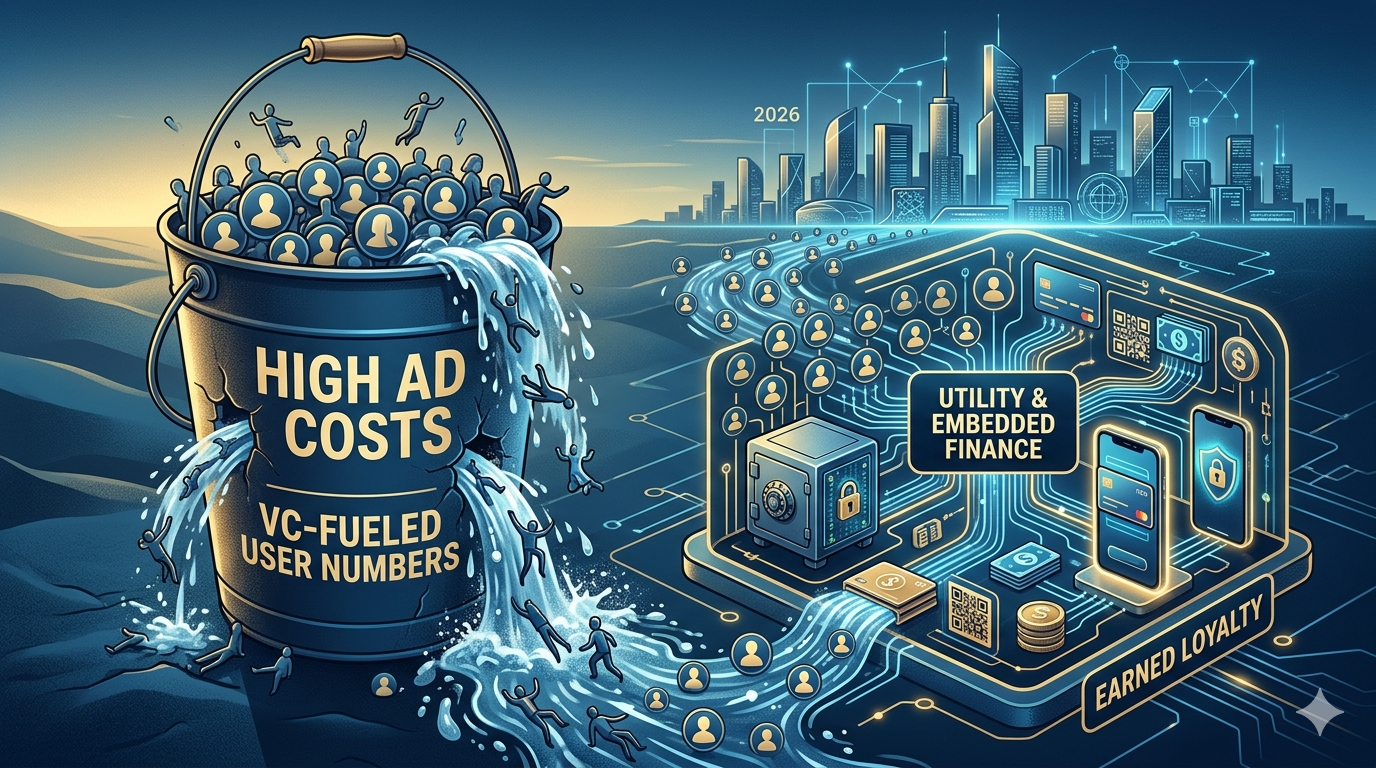
Digital Platforms and the New Economics of Customer Retention in 2026

The era of burning venture capital just to inflate user numbers has officially hit a wall. For years, the standard playbook for growth hackers was simple: pump money into social media ads, jam traffic into a funnel, and hope a small percentage of those people would eventually stick. That logic has completely collapsed in 2026. Advertising costs have reached a breaking point where buying a click is a luxury most business margins simply cannot absorb.
Today, the real struggle for survival has moved deep inside the product architecture. If a platform cannot hold onto the users it already has, it is effectively a leaking bucket that no amount of marketing cash can fix.
This power shift is fueled by a much more cynical and exhausted consumer base. Subscription fatigue is no longer just a trend; it is a defensive strategy for modern households. People are ruthlessly auditing their monthly bank statements to find any excuse to hit the cancel button.
In this cutthroat environment, loyalty is never the default setting. It has to be earned every single day. For investors, retention curves have replaced raw registration counts as the only honest metric of a company’s health. A platform plagued by high churn is now viewed as a liability, regardless of how many people are walking through the front door.
Utility Is the New Growth Hack
Lifetime value used to be a theoretical figure hidden away in investor pitch decks. Now, it serves as the primary engine for every product decision. Instead of chasing superficial engagement through endless notifications or gamified streaks, developers are looking for ways to weave their tools into the actual fabric of a person’s life. It is all about deep integration. When a service holds your data, manages your professional workflows, and facilitates your daily connections, it stops being an app and becomes an essential piece of infrastructure.
The goal here is not to build a technical prison through forced lock-in. That rarely works for long. The smarter strategy is to build a system where the value grows exponentially the longer a person stays active.
After months of tweaking settings, building workflows, and accumulating data that’s actually useful, a person isn’t staying on a platform because they feel stuck. They’re staying because the alternative is starting completely from scratch, and that’s a headache most people simply won’t sign up for. That’s a pretty healthy place for a platform to be in. It doesn’t matter how slick the next competitor’s launch is. You can’t easily replicate months of someone’s personal history.
Embedded Finance as a Structural Anchor
We are watching a massive convergence where non-financial apps are starting to behave like banks. Whether you look at a digital marketplace or a creative suite, platforms are building their own internal financial systems to keep capital moving within their own ecosystem. When a user holds a balance or manages assets directly inside a service, the psychological relationship changes instantly. The platform stops being a tool and starts being a vault.
This financial layer is one of the strongest retention anchors available in the current market. Moving money is always a more friction-heavy task than moving simple data files. Stablecoins have become the preferred plumbing for these internal economies because they offer the speed of digital assets without the gut-wrenching volatility that keeps most people away. By embedding these tools, platforms can handle cross-border payments and instant settlements that traditional banks still struggle to process. It turns a simple software service into a necessary financial hub for the user.
Eliminating Friction to Build Lasting Habits
Nobody goes out of their way when there’s an easier option sitting right there. That’s just human nature. The product teams that really get this aren’t adding more features or sending more notifications. They’re doing the opposite. They’re quietly smoothing out every little bump in the experience until using the platform feels like second nature. That’s where retention actually happens.
If a platform can anticipate what you need and handle the technical heavy lifting before you even ask, it becomes a habit. Once a behavior becomes automatic, the likelihood of that user leaving for a competitor drops toward zero.
In the digital asset space, this often comes down to how easily a person can move between cash and assets. Many successful platforms have found that letting users buy Tether directly without leaving the app keeps them from wandering off to an external exchange. When a user can manage their liquidity and their work in one single spot, the convenience factor alone creates a powerful pull. This isn’t about adding complex features. It is about removing the three extra clicks that usually kill a transaction. The platform that stays out of the user’s way the most is the one that gets used the most.
Custody and the Foundation of User Trust
As we move toward a world where more of our wealth exists in digital form, users have become obsessed with the idea of custody. They want to know who actually owns the keys to their assets at any given moment. If a platform feels like a black box where you can deposit funds but struggle to withdraw them, people will maintain their distance. High-level engagement requires a foundation of deep trust, and that trust is built on the concept of portability.
This focus on safety is exactly why so many people are now looking for the best wallets for USDT to ensure they have an exit strategy if a service fails. The best wallets for USDT tend to be non-custodial, meaning the platform you use day to day never actually holds your funds. That distinction matters more than most people realize until something goes wrong. Keeping your stablecoins in a wallet you personally control is one of those habits that feels unnecessary right up until the moment it isn’t.
Smart platforms don’t play games with your money. They back open standards, let you hook up your own secure storage, and don’t guilt trip you about it. Giving people an obvious way out might feel like bad business, but it’s really the opposite. When someone isn’t quietly stressed about whether they can access or move their assets, that mental block disappears, and they actually engage with the platform properly. Openness like that doesn’t push users away. It’s what makes them comfortable enough to stay.
Closing the Education Gap to Reduce Churn
Most platforms lose users gradually, one confusing interaction at a time. When someone can’t figure out how something works, they don’t usually complain about it. They just drift away. That’s a particularly ugly problem in technical spaces where the gap between a newcomer and a power user is already pretty wide. If a product doesn’t actively close that gap, it’s basically doing the competitor’s job for them. Platforms that take real responsibility for their users’ education are seeing significantly better long-term numbers.
Resources that break down technical jargon into plain English are becoming a vital part of the product experience itself. Webopedia has built a solid reputation for taking dense technical concepts and making them feel approachable to pretty much anyone.
The platforms that take education seriously and build it into the onboarding from day one are solving one of the biggest churn problems out there. Because a lot of users don’t leave because the product is bad. They leave because they never felt confident enough to really use it. Fix that early and everything changes. Suddenly people are poking around new features instead of avoiding them, and when something trips them up later, they work through it rather than walking away. Knowledge isn’t just power in this economy; it is a concrete reason to stay.
The Long View of Sustainable Platform Design
Building for durability has replaced building for buzz, and honestly it’s long overdue. Users in 2026 have zero patience for broken promises or products that feel like they were designed to confuse. Real retention is quiet. It’s a fast payment here, a clear explanation there, a digital asset that actually feels safe.
The platforms winning right now are the ones that decided to just be straight with people. No hidden cancel buttons, no assets trapped behind walls of fine print. They made themselves genuinely useful and let that do the talking. In the end, retention isn’t a clever growth hack. It is the natural outcome of building something that people actually need to navigate their daily lives.
Automated Execution and Range Bound Trading
Retention also benefits from features that help users grow their capital through low effort market participation. Many platforms are now integrating basic automated trading tools that allow people to profit from price fluctuations without needing to monitor charts all day. A common approach is range bound trading, where the system automatically buys an asset at a low point and sells it at a high point within a specific price channel. When a platform provides these passive earning opportunities, it creates a financial incentive for the user to keep their funds active within that specific ecosystem.
