
Quantifying the FX Robot Advantage: What the Numbers Reveal About MT4 and MT5 Expert Advisor Performance vs Manual Trading

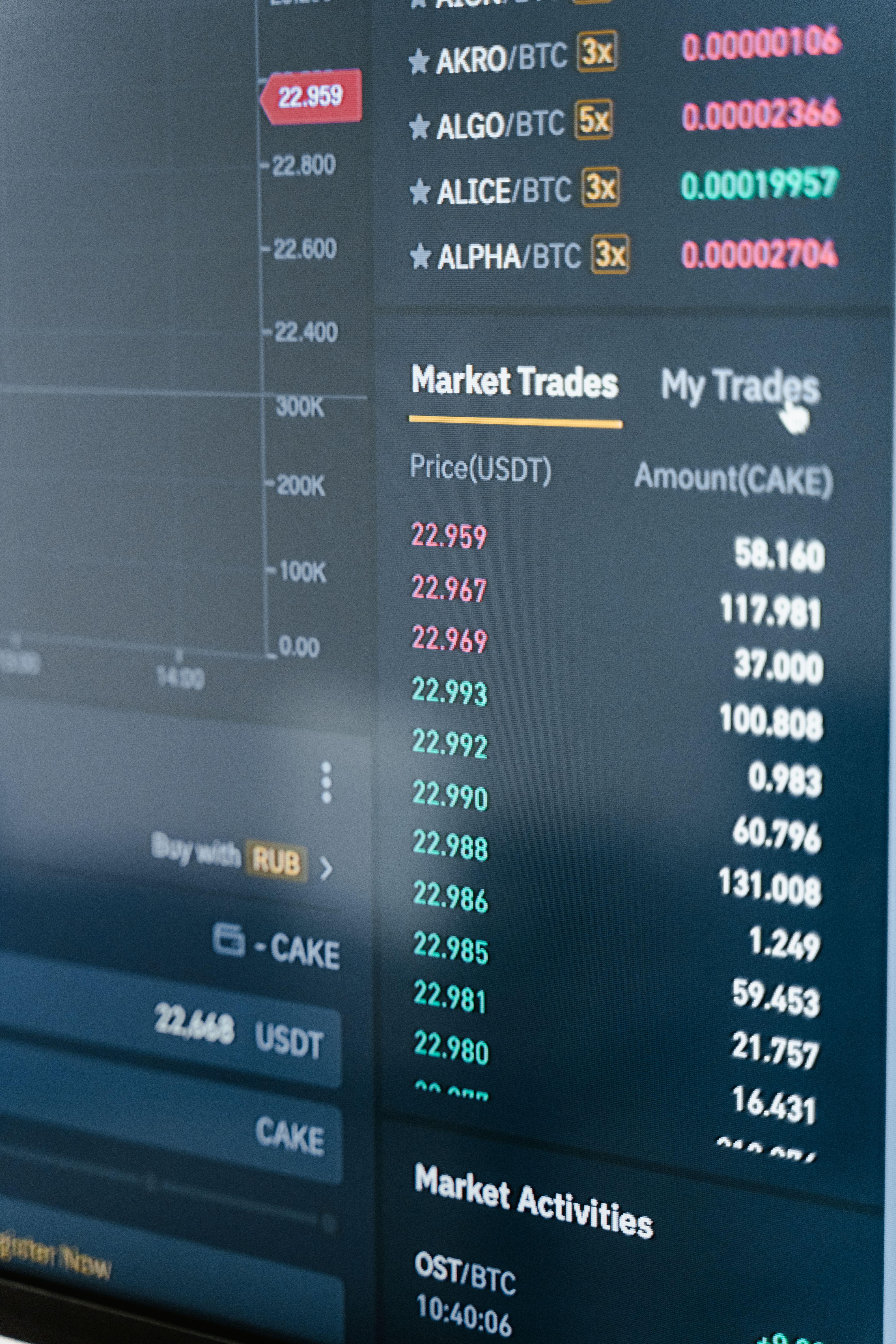
Quantifying the FX robot advantage reveals a startling gap in performance because approximately 60% of automated retail traders generate positive annual returns, while 90-95% of manual traders find themselves consistently failing or losing money. The reason for this discrepancy is likely because trading robots can process large amounts of market data and execute trades instantaneously without fear, greed or hesitation.
The longtime debate between algorithmic automation and discretionary human decision-making when it comes to forex trading is no longer a matter of philosophical preference because, for both institutional and retail traders, empirical data has turned the conversation toward quantifiable performance metrics.
Analyzing the specific operational metrics in the form of latency, drawdown distribution and trade consistency makes it possible to quantify precisely how these automated systems compare to human execution. Understanding the numbers can reveal the true operational capabilities of systematic forex execution tools operating inside a fully automated metatrader environment and how they contrast to the traditional approaches of manual trading.
Quantifying the Execution Deficit Created by Human Latency
Within the forex market, liquidity changes and prices fluctuate down to the millisecond and this exposes the significant contrast in terms of execution speed between manual traders and automated algorithms.
The Manual Bottleneck
The physiological limit for a human’s visual reaction time has been estimated to be anywhere between 200 and 250 milliseconds. In trading, manual traders need to:
- Observe a price setup
- Process the risk
- Verify the technical parameters
- Physically click a mouse or press a hotkey
This cognitive and physical loop can take 1,000 to 3,000+ milliseconds on average.
The Algorithmic Advantage
An Expert Advisor (EA) that’s running on MetaTrader 4 (MT4) or MetaTrader 5 (MT5) and is hosted on a specialized Virtual Private Server (VPS) close to a broker’s trader servers can process the incoming tick data and transmit an order within 1 to 50 milliseconds.
The contrast between the two isn’t small, and it certainly makes a substantial difference to the precision and speed of trade executions. This latency difference can also result in significant financial implications in the form of slippage. This occurs when the price you entered for an order it differs from the price at which the order is processed. Over time, this slippage can significantly whittle away at your profit margins.
The Psychology of Drawdowns and the Win-Rate Fallacy
One of the most common misconceptions people hold about EAs is that their success boils down to their ability to maintain an incredibly high win rate. However, the reality is that commercial EAs that have a win rate of 90% and over are often using high-risk grids or Martingale strategies that risk exorbitant capital losses during unexpected market shifts.
The authentic, institutionally modeled EAs like those available on FXiBot usually operate with a far more modest win rate of around 51-56%. As it turns out, their true mathematical advantage lies in their strict risk distribution and complete emotional discipline.
Manual traders are highly susceptible to the cognitive biases described in behavioral economics. When you’re manually trading, experiencing a string of losses can significantly increase the urge to break out of your discipline.
This can manifest in many ways, including:
- Over-leveraging as a way to quickly recover your losses, which is also referred to as revenge trading.
- Moving your stop-loss orders further away in the hopes that a losing trade will reverse.
- Taking your profits too early out of fear that a winning trade will turn into a loss.
In trading, your emotions clouding your judgement can lead to making very costly mistakes. The EAs from FXiBot process drawdowns entirely through predefined math. If the strategy’s parameters dictate that a trade must be closed at a loss of precisely 1.5% of total account equity, the trade is instantly executed.
The removal of emotional bias from trading decisions is arguably one of the greatest benefits afforded by EAs in forex because it ensures that your strategies are executed based on mathematical facts and not influenced by feelings.
The Strategic Compromise of Implementing a Hybrid Model
If you want to maximize the statistical benefits of automation while also minimizing the risks associated with rigid code, you might want to use a hybrid model. Many of the top-performing retail traders and proprietary firms have opted for this by implementing:
- Humans as managers of risk who monitor macroeconomic schedules, assess high-level market sentiment and decide which automated strategies align with the current market.
- Algorithms for execution to manage the exact trades, monitor adjustments and calculate position sizing.
This hybrid model can give you the best of both in terms of optimizing your trading activities.
Forex Bots Give Traders a Quantifiable Advantage
Before, the question of whether forex bots improve overall trading execution came down to a matter of opinion, but now that the contrasts can be quantified, the advantages are crystal clear. Forex bots are faster, more accurate, and execute trades with a mathematical precision that would be impossible for manual traders to replicate.