
What trading simulations can teach about online casino probabilities

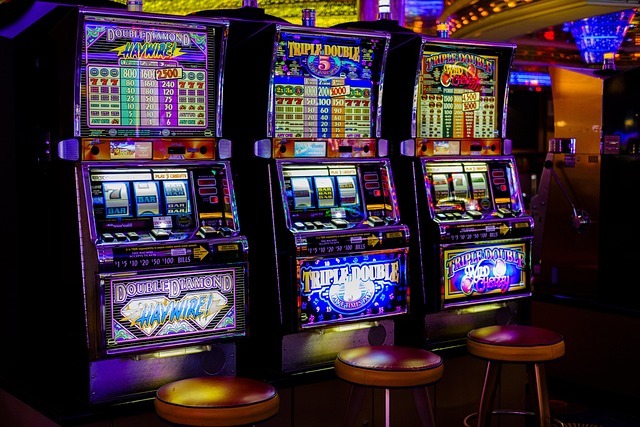
(Source)
Trading simulations offer a clean way to see probability at work when outcomes feel uncertain. Markets and casino games look different, yet both run on the same arithmetic. A 2023 review from Insider Monkey pointed to probability and statistics as the shared backbone, noting how simulations sharpen understanding of expected value, variance, and risk. That toolkit helps gamblers read odds and think in long-term averages. Luck still matters, but the process stops feeling mysterious. The overlap suggests that steady habits and data usually beat gut feeling.
The probability-based mindset
Small edges, applied consistently, change results. A model with even a 2 percent advantage can grow capital when it is used with discipline. A casino with a 5 percent house edge over thousands of wagers reaches the same end, albeit from the other side of the table. Online platforms such as Vegastars NZ work under this statistical principle, using controlled probability rather than luck to sustain revenue. Lessons from probability-focused investing make roulette, blackjack, and slot math easier to parse.
Practice locks the idea in. University of Cambridge’s Center for Risk Studies found that traders who stuck to a defined algorithm improved simulated results by roughly 14 percent over 1,000 trades. Players who set limits and keep to a plan show a similar pattern. Once you grasp compound probability and variance, streaks look less like fate and more like noise. Concepts such as distribution curves and expected value frame wins and losses without the drama.
Emotional control and statistical patience
Risk management is part math, part nerves. Simulations train you to sit through swings without overreacting. A cluster of losses does not prove failure when judged over many trials. Online casino players at Vegastars NZ show a comparable pattern, where short-term fluctuations often disguise a game’s underlying return-to-player rate (RTP).
A 2024 analysis from the University of Nevada’s Center for Gaming Research places most online slot RTPs near 94 to 97 percent, which implies a typical loss of about 3 to 6 dollars per 100 over time. Knowing this tempers the rush of a hot streak. Simulations build patience, nudging people to trust the averages rather than the last spin. Diversification and volatility control help both traders and casinos stay upright when variance bites.
Mathematical frameworks guiding probability
The expected value sits at the center. Traders scanning hundreds of possible outcomes do the same math that casino analysts do when they price returns. An expected value of -0.03 per unit simply marks a 3 percent house edge. That engine powers almost every game and mirrors how simulations evaluate strategies.
The Kelly Criterion adds a practical rule for sizing risk. Born in 1950s telecommunications, it later became a common tool in finance and gaming to balance growth with drawdowns. Research published in 2022 by the Journal of Quantitative Finance links careful Kelly use with better long-run portfolio efficiency. Casinos apply the logic differently, setting payout structures that guard the house. In short, proportional bets matter. So does variance. Lower standard deviation means smoother paths, something cautious traders and responsible players both prefer.
Learning through simulation practice
Digital simulations let people test ideas without money on the line. You can watch thousands of scenarios and see randomness behave across long runs. Casino developers do a similar kind of stress testing, modeling millions of spins or hands before release. Eye on Annapolis reported in July 2024 that simulation users improved pattern recognition by about 30 percent compared with single-event learning.
Repeated trials teach a quiet lesson. Under the same rules, outcomes bounce around, then settle toward the math. Longer series reduce variance and reveal the true expectation. With time, the draw is not the thrill of a quick win, but the clarity of structure.
Responsible approach to gambling
Understanding probability sharpens judgment, yet risk remains. The house edge is built in and persistent, regardless of skill. Treating gambling as paid entertainment, setting firm limits, and respecting statistical boundaries keeps expectations grounded. Insights borrowed from trading simulations support that mindset. You cannot control randomness, but you can understand it, and that makes it clearer and more sustainable.