
Recession Fear Index (RFI)- What Is It And Does It Work?

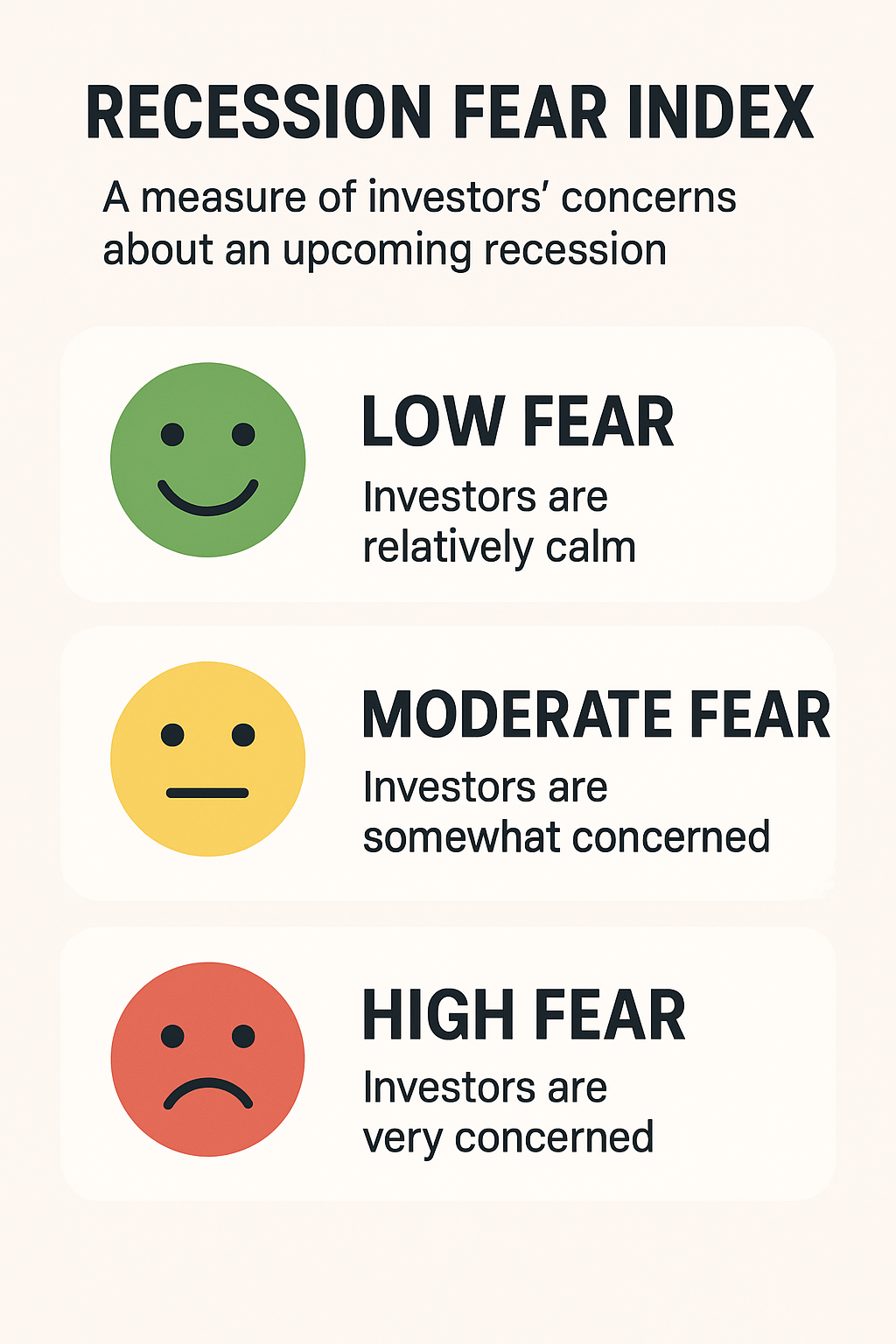
The Recession Fear Index (RFI) is proposed as a direct measure of recession concerns based on Google search activity. The development of the RFI is premised on the shift toward active information-seeking by market participants.
The search frequency data derived from Google is deemed representative of the internet search behavior of the general population, given Google’s dominant market share. Critically, search activity serves as a revealed attention measure: if users search for recession-related terms, they are unambiguously concerned about economic downturns.
This article is based on a research paper by Yong Ma, Shaofeng Zhang, Mingtao Zhou, and Xiaozhou Zhouc called Do Recession Fears Help to Predict Stock
Market Volatility? International Evidence. The primary goal of the research is to predict volatility, not market returns, for 11 countries examined (Australia, Canada, France, Germany, Italy, Japan, the Netherlands, Sweden, Switzerland, the United Kingdom, and the United States).
Related reading: – Top Trading Indicators
How The Recession Fer Index Is Calculated
1. Time Span and Frequency: The data sample runs from January 2004 to December 2023 and uses a monthly frequency, dictated by the availability of Google Trends data.
2. Primitive Search Terms: The index aggregates search data for 12 primitive terms related to recession fears. These terms were selected using the Google Keyword Planner, starting with “recessions,” and then filtering suggested keywords for relevance and adequate volume. The 12 terms include: “recessions,” “economic recession,” “economic downturn,” “economic crisis,” “crisis,” “recession,” “financial crisis,” “economic depression,” “economic meltdown,” “current recession,” ‘business downturn,” and “market crisis”.
3. Aggregation Technique (PLS): The RFI is constructed using the Partial Least Squares (PLS) technique. This method is crucial for extracting a common component of recession fears by combining individual proxies based on their covariances with future stock market volatility. PLS efficiently summarizes information and helps eliminate measurement errors and “noises irrelevant to stock market volatility” introduced by variations in search behavior.
Does the Recession Fear Index (RFI) Predict Stock Market Volatility?
The research indicates that the RFI is a powerful predictor of stock market volatility across 11 industrialized countries.
• In-Sample Predictability: When the RFI is added to the standard autoregressive (AR) benchmark model, the index exhibits a strong ability to predict stock market volatility. The in-sample regression slopes on RFI were significantly positive at the 1% level across all 11 countries examined (Australia, Canada, France, Germany, Italy, Japan, the Netherlands, Sweden, Switzerland, the United Kingdom, and the United States).
• Economic Magnitude: The average effect across all countries suggests that a one-standard-deviation increase in RFI leads to an 8.92% higher annualized market volatility in the following month.
• Out-of-Sample Reliability: The RFI sustains its forecasting performance in out-of-sample tests. The out-of-sample $R^2_{OS}$ statistics were positive and statistically significant across all countries, ranging from 1.43% to 6.29%. This positive value suggests that the extended model incorporating RFI improves the forecast accuracy over the benchmark model.
• Long-Term Forecasting: The RFI maintains a significant ability to predict long-term stock market volatility across most countries for prediction horizons up to 12 months. The predictive power generally increases with the forecasting horizon up to six months.
RFI Outperforms Economic Fundamentals and Uncertainty Measures
The predictive power of the RFI is demonstrated to be distinct and valuable by controlling for other established predictors:
1. Economic Fundamentals: The RFI’s predictive ability remains economically and statistically significant even after controlling for various common economic variables (including industrial production growth rate (IP), unemployment growth rate (UNEMP), stock market returns (MKT), and term spread (TMS)).
2. Uncertainty Measures: The forecasting efficacy of RFI is not overshadowed by extant uncertainty measures, such as the Global Economic Policy Uncertainty (GEPU), Monetary Policy Uncertainty (MPU), or the Chicago Board Options Exchange volatility index (VIX). For instance, after controlling for VIX, the RFI slope estimate for Canada was 9.16%, which is close to the estimate without controls (9.45%).
Economic Value for Investors
The RFI provides sizable utility benefits to investors. Under a mean-variance utility-based framework, the model augmented with RFI significantly enhances utility benefits compared to the benchmark model. Furthermore, increased volatility leads to lower stock prices (normally).
All utility differentials (∆RU) were significantly positive at the 1% level across all countries, indicating that investors would be willing to pay a premium for the improved volatility forecasts provided by the RFI.