

Bitcoin Intraday Seasonality Trading Strategy (Backtest, Performance, Results, Video)

Bitcoin is traded 24/7 and there exists a few seasonal patterns. For example, being invested from 5 PM to 7 PM any day has paid off well, and so has being invested on certain days. Let’s look at a Bitcoin intraday seasonality trading strategy. In this article, we are going to explore the seasonality of Bitcoin intraday, backtest some strategies, and see the results.
Bitcoin has captured the attention of traders and investors worldwide over the last years, despite its gut-wrenching volatility. While its inherent volatility presents both risks and opportunities, seasoned traders have sought to identify patterns and seasonalities to optimize their intraday trading strategies. But do these opportunities truly exist? And, more importantly, are they profitable?
Let’s look at the findings from Quantpedia, a website devoted to quantified strategies, just like ours. If seasonalities are your thing, please have a look at our landing page of plenty of seasonal trading strategies. Or, if you are into Bitcoin and crypto, then please have a look at other cryptocurrency trading strategies.
Key Takeaways
- Bitcoin shows clear intraday seasonal patterns
- Peak trading hours for Bitcoin: 21:00–23:00 UTC (17:00–19:00 ET)
- Strategy: Hold Bitcoin only during these 2 hours daily
- Best days to trade: Monday tops performance, followed by Thursday, Saturday, and Sunday
- Adding a 200-day SMA filter improves returns slightly
- Intraday seasonality exploits 24/7 market dynamics and liquidity swings
- Backtested strategy shows strong equity growth during peak hours
- Incorporating intraday seasonality can enhance short-term trading performance
Understanding Intraday Seasonalities
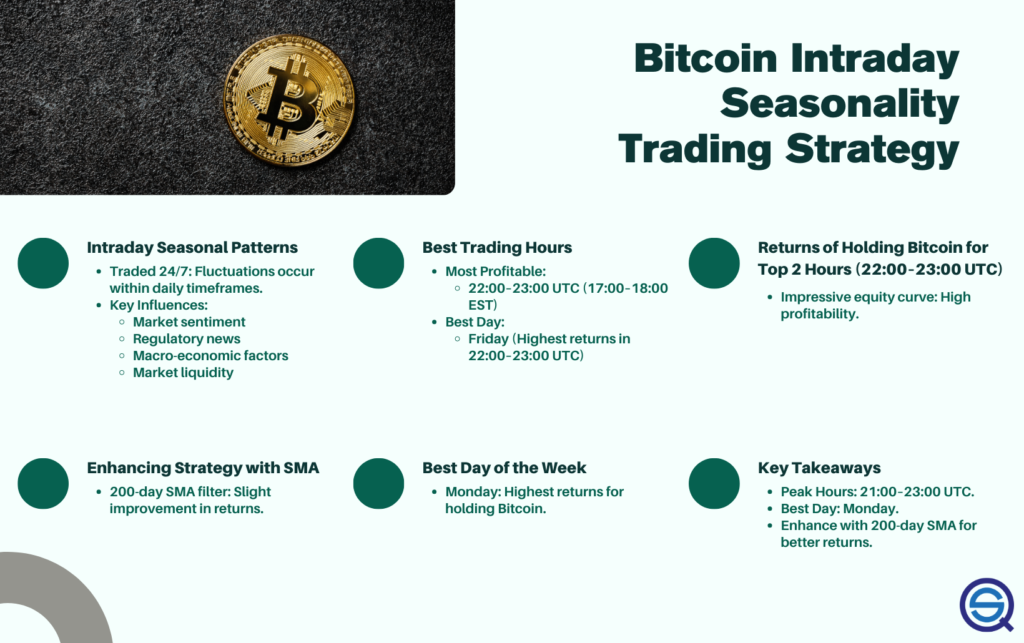
Intraday seasonalities refer to recurring patterns or trends that occur within the confines of a single trading day.
Bitcoin, being a 24/7 market, provides ample opportunities for traders to capitalize on these intraday fluctuations. To comprehend these seasonalities, traders often analyze historical price data, volume trends, and market sentiment throughout different time frames within a day.
Today, in this analysis, we are going to focus on intraday seasonalities.
What Factors Influence Intraday Seasonalities?
Bitcoin is traded 24/7, but certain periods coincide with the opening and closing of major global financial markets. These transitions often result in increased trading activity and volatility as market participants react to new information and adjust their positions.
- Market Sentiment: Investor sentiment is a major driver of Bitcoin’s intraday movements. Positive or negative news, social media trends, and public perception can quickly influence market sentiment. Traders should be aware of events that could impact market sentiment and react accordingly.
- Regulatory Developments: Regulatory announcements and developments can have a profound impact on Bitcoin prices. News related to government regulations, legal frameworks, and potential bans or approvals can lead to sharp intraday price movements. an example is what happened in late 2023 when Bitcoin rallied on the news that SEC would say yes to Botcoin ETFs.
- Macro-Economic Factors: Economic indicators, such as inflation rates, interest rates, and overall economic health, can influence Bitcoin prices. Traders should pay attention to macroeconomic trends and events as they can impact the broader financial markets and, consequently, Bitcoin.
- Market Liquidity: Liquidity levels can vary throughout the day, influencing intraday seasonalities. The lunchtime lull, for example, is often characterized by lower liquidity, which can result in decreased volatility. Traders need to be mindful of liquidity when planning their intraday strategies.
With this in mind, it is now time to backtest Bitcoin and see if we find some Bitcoin intraday seasonality trading strategies.
Are There Bitcoin Intraday Seasonality Trading Strategies?
An article in Quantpedia called The Seasonality of Bitcoin explored the intraday data of Bitcoin and conducted an in-depth analysis of potential seasonal patterns. We’ll use this article as a reference throughout this article.
For example, here are the returns of bitcoin per hour of the day since November 2015:
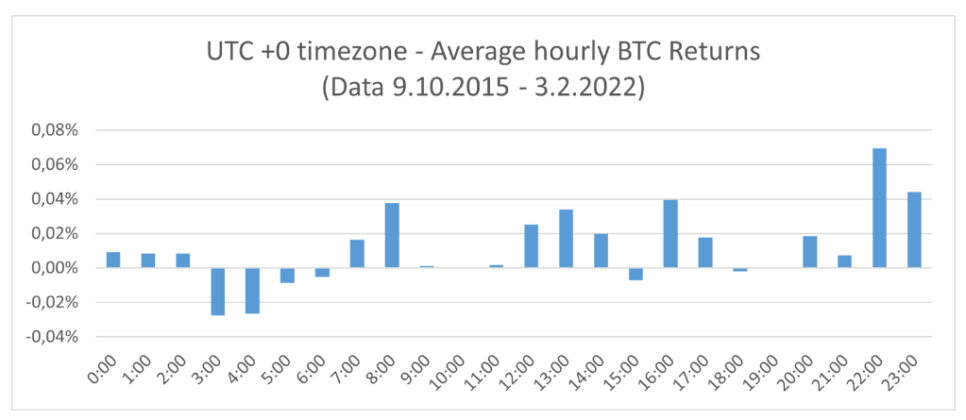
As you can see, the two most profitable hours are 22:00 and 23:00 UTC (17:00 and 18:00 Eastern Time).
If, for example, you were to hold Bitcoin for just those two hours each day, here is what your equity curve would look like:
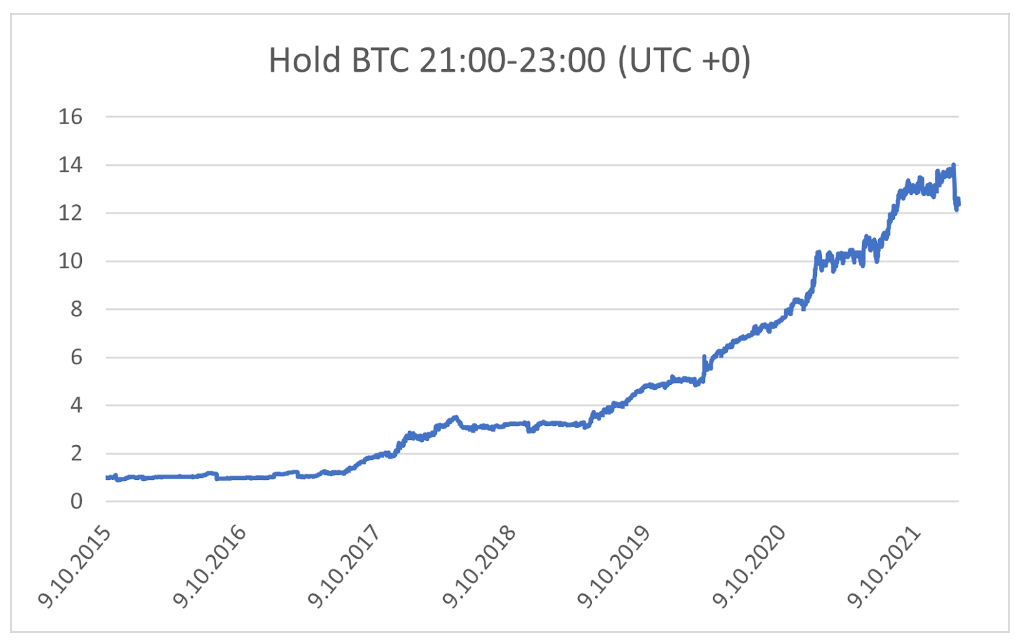
The returns are quite impressive!
Are you curious about the optimal day of this 2-hour Intraday Bitcoin seasonality?
Friday takes the lead with the highest returns between 22:00 and 23:00. Thursday follows as the second-best day for trading during this time, succeeded by Saturday and Sunday.
And how does the strategy perform when you incorporate a simple moving average? Here are the returns of the same strategy with an SMA filter (200-day moving average filter):
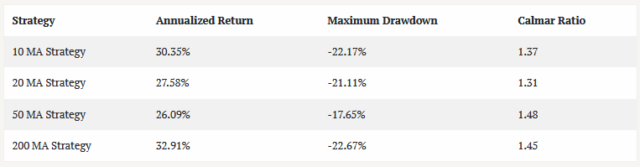
Notably, adding a 200-day SMA improved the returns a little. Overall, we could conclude that there exists a seasonality in Bitcoin where the cryptocurrency performs best between 21:00 and 23:00 UTC.
Bitcoin Intraday Seasonality Trading Strategy – Best Day Of The Week
And which is the best day to hold Bitcoin? Here are the returns of Bitcoin by day of the week:
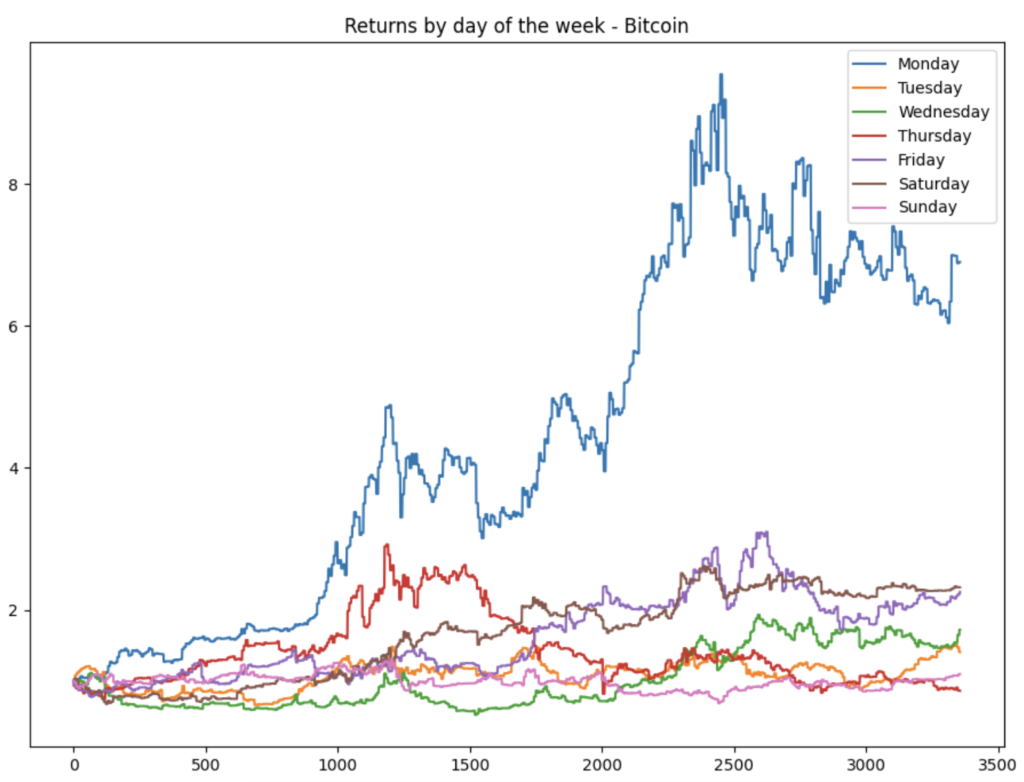
By far, the best day to hold Bitcoin is Monday. Who would have said?
If you are interested in more intraday seasonal trading strategies, please also read about the lunch effect in the stock market.
Bitcoin Intraday Seasonality Trading Strategy – Conclusion
In conclusion, today we explored Bitcoin intraday seasonalities through a comprehensive trading strategy, which has yielded some potential insights for further research.
The identified peak hours, notably between 21:00 and 23:00 UTC, showcase a distinct seasonality in Bitcoin’s behavior. Moreover, the integration of a 200-day SMA demonstrates the potential for enhancing returns, providing traders and investors with an improved approach to navigating the volatile Bitcoin market.
Lastly, we found that Monday is the best day to buy and hold Bitcoin.
