

Gold Overnight Strategy: Night Trading Video, Rules, Backtest

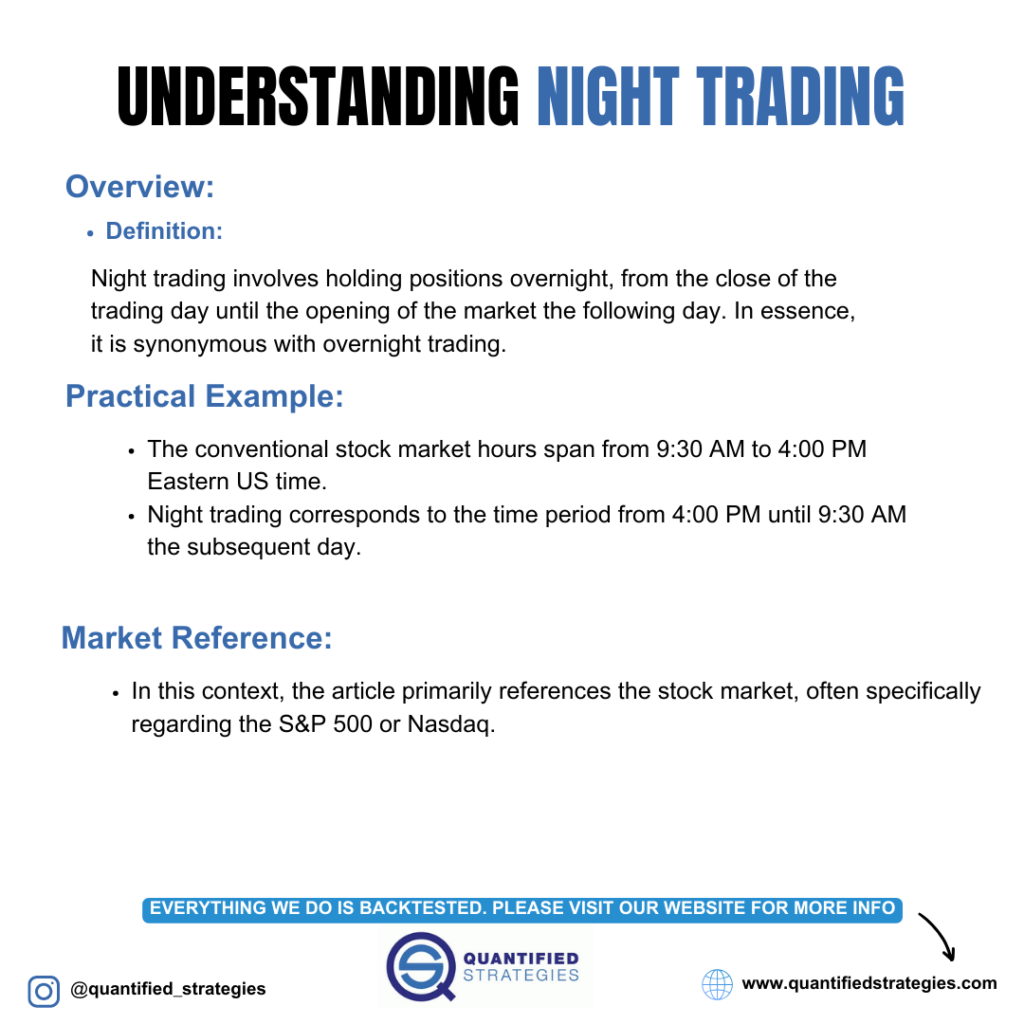
The Gold Overnight strategy is a trading strategy that is used to take advantage of the overnight price movements in the gold market. The strategy involves buying gold futures contracts or the gold miners ETF at the close of the market and selling them the next day at the open.
As with the S&P 500 index, gold also shows an overnight bias — the tendency for the gains to accrue during the night. As such, night trading and overnight trading strategies in gold or the gold miners ETF can be potentially profitable. But what exactly is the gold overnight trading strategy?
In this post, we look at the gold overnight trading strategy. We end the article with a backtest.
Understanding the Basics of the Gold Overnight Trading Strategy
The Gold Overnight strategy is a trading strategy that is used to take advantage of the overnight price movements in the gold market. The strategy involves buying gold futures contracts (or GLD) or the gold miners ETF (GDX or GDXJ) at the close of the market and selling them the next day at the open.
The idea behind the strategy is to capture the price differential that occurs overnight due to changes in global market conditions, such as interest rate changes or political events.
GDX overnight trading strategy
For example, below is the equity curve of the gold miners ETF (GDX) where you buy the close and sell at the next open:
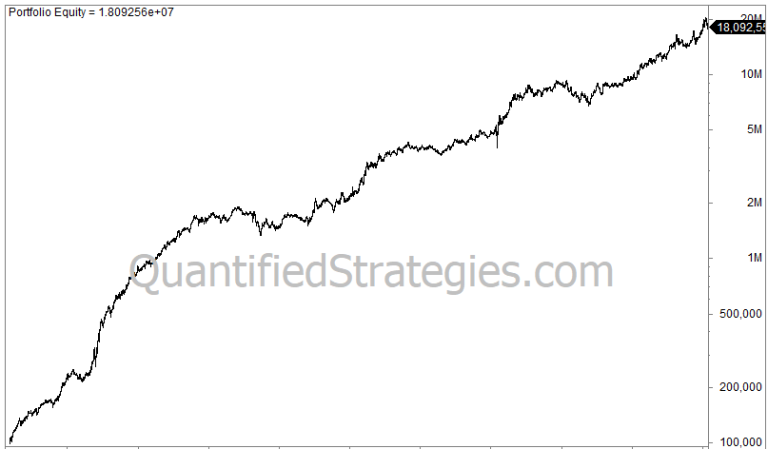
The average daily gain is 0.11%, but it’s probably not tradable because GDX is trading at a low price.
Compare that to a situation where you buy the GDX at the day’s open and sell at the day’s close every day; the equity curve would have looked like this:
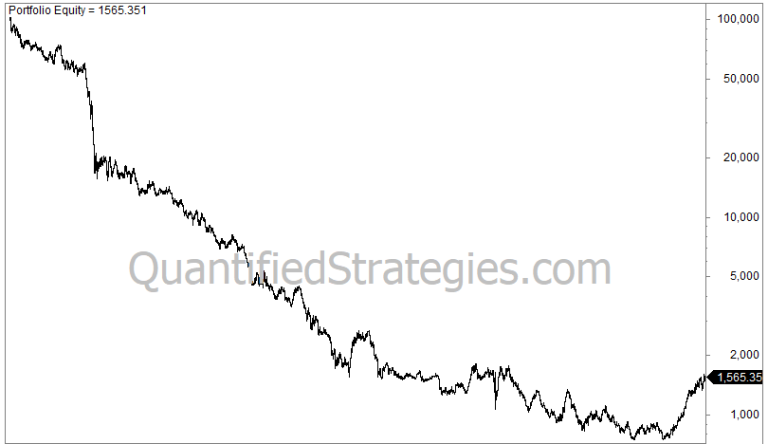
The average loss is 0.06%.
GLD overnight trading strategy
Let’s switch to the gold price. Because gold trades for almost 24 hours, we use the ETF that tracks the gold price: GLD. GLD stops trading at 1600 local NY time and opens at 0930 the next day.
If we buy the close and sell the next day’s open, we get the following equity curve:
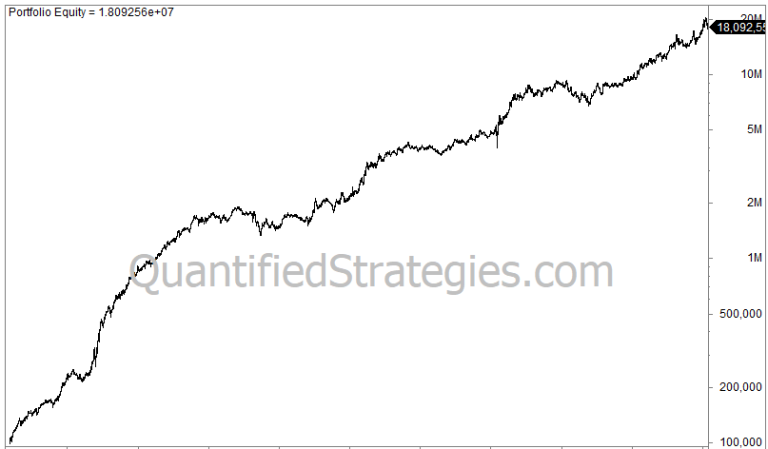
The performance is a bit erratic, but annual returns are 11.4%, while buy-and-hold is 11.8%. Thus, all the gains have come from the close until the next open. The average gain is 0.05%, which is not tradable but is precisely the same as in the S&P 500.
If we buy the open and sell the close on the same day, we get the following result:
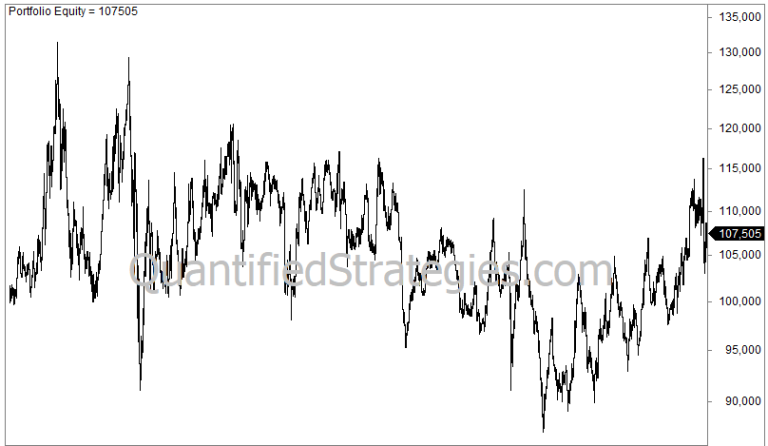
The average gain is practically zero, despite GLD having risen 976% during the period.
It is important to note that the gold overnight trading strategy carries a high level of risk and volatility. The gold market is highly influenced by a number of factors such as global economic conditions, geopolitical events, and market sentiment. As a result, the price of gold can be highly unpredictable, making it difficult to predict the direction of overnight price movements without the right trading strategy.
After two decades of trading and backtesting, we conclude that gold and commodities are difficult to trade – much more complicated than stocks.
Developing a Trading Plan Based on the Gold Overnight Edge Strategy
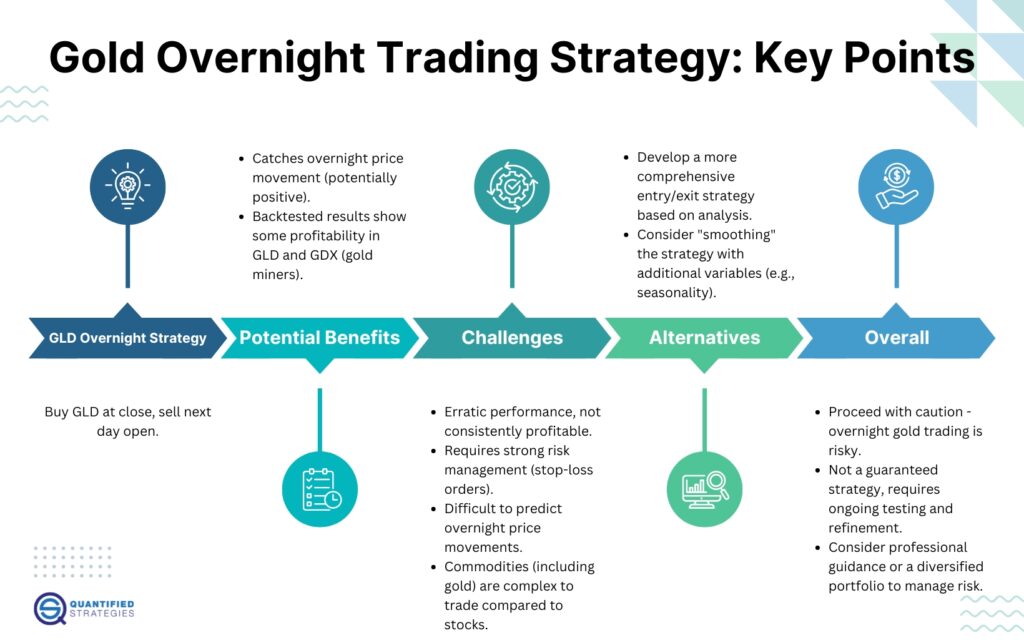
Developing a trading plan based on the Gold Overnight Edge strategy requires a thorough understanding of the gold market and the factors that influence its overnight price movements. Here are the steps to follow:
- Conduct research and analysis of the gold market, including studying historical price data, monitoring global economic conditions, and keeping track of geopolitical events that could impact the price of gold.
- Set clear goals and objectives for your trading plan, including determining the amount of capital you are willing to risk, setting a profit target, and identifying the level of risk you are comfortable with. Do you have a positive statistical expectancy?
- Develop a strategy for executing trades, including determining the best time to buy and sell gold futures contracts, as well as setting stop-loss and profit-taking orders to manage risk. Only a backtest can tell you that.
- Have a risk management plan in place, including determining the amount of capital you are willing to risk on each trade, and setting up potential stop-loss orders to limit losses. Use leverage cautiously.
Risk Management for the Gold Overnight Edge Strategy
To manage the risk associated with the strategy, do the following:
- Determine the amount of capital you are willing to risk on each trade
- Set stop-loss orders to limit potential losses. However, we rarely find that stop-loss orders bring any value to a strategy – you risk exiting your positions at bad times.
- Have a well-defined risk-reward ratio and stick to it
- Use leverage cautiously as it increases risks. As a rule of thumb, you should always trade a little smaller than you’d like.
- Have a plan in place for both entry and exit of the trade. Backtest!
- Be aware of the overnight price movements and the volatility of the gold market
- Have a diversified portfolio to spread the risk
- Regularly review and adjust the risk management plan as needed
Mastering Psychology for Gold Overnight Edge Strategy
Mastering the psychology of the Gold Overnight Trading strategy requires a combination of discipline, patience, and emotional control. Here are a few tips that can help:
- Have a clear understanding of the strategy and your goals: The first step in mastering the psychology of the strategy is to have a clear understanding of the strategy itself, as well as your goals and objectives. Understanding what you are trying to accomplish will help you stay focused and motivated.
- Keep emotions in check: Trading can be an emotional experience, and it’s important to keep your emotions in check in order to make rational decisions. This means avoiding impulsive trades, and sticking to your trading plan even when things aren’t going as expected. The best trades are often the ones you don’t take.
- Stay disciplined: The Gold Overnight trading strategy requires discipline to be successful. This means staying focused, avoiding distractions, and sticking to your trading plan even when things get difficult.
- Be patient: Patience is key when it comes to the Gold Overnight Trading strategy. The market can be unpredictable, and it’s important to be patient and wait for the right opportunities to arise.
- Learn from your mistakes: Every trader will make mistakes, but it’s important to learn from them and use them as opportunities for growth and improvement.
Executing Trades with the Gold Overnight Trading Strategy
Executing trades with the Gold Overnight Trading strategy requires a well-defined strategy and a clear understanding of the market. You will need to have a plan in place for both entry and exit of the trade. This determines the best time to buy and sell gold futures contracts or the gold miners ETF in the after-hours based on your analysis and strategy. You may also have to set stop-loss and profit-taking orders to manage risk. You can develop a strategy yourself or buy the logic from Quantified Strategies.
Enhancing Returns with the Gold Overnight Trading Strategy
Enhancing returns with the Gold Overnight trading strategy requires a combination of market analysis, risk management, and discipline. Here are a few key steps:
- Use both technical and fundamental analysis to assess the market conditions. You can use those to play around different trading ideas to backtest
- Have a well-defined strategy in place for both entry and exit of the trade, and stay disciplined and stick to it
- Have a well-defined risk-reward ratio and stick to it; it can help you to avoid impulsive decisions
- Use leverage cautiously as it increases risk, but it also can increase returns if used properly
Gold overnight trading strategy backtest – does it work?
The charts above show a potential solid edge from the night trading session in GLD, even though it seems to have been persistent only during periods. The overnight edge works very well in the stock market, where it has been very consistent for over three decades.
Is it possible to “smooth” the overnight gold edge to make it a tradable strategy? Below are a couple of ideas we are testing out:
Gold (GLD/@GC) overnight long strategy
We have one long overnight in incubation (demo account for testing) for a few months. The strategy buys the close and sells the next open. So far, it looks reasonably good:
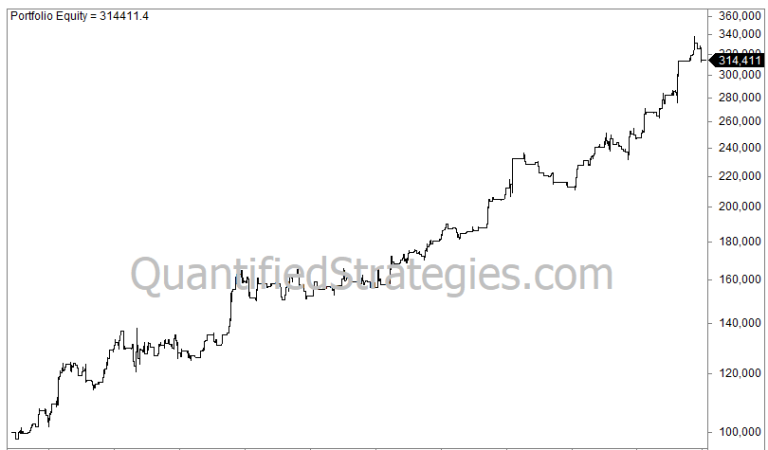
There are two straightforward variables, one of them a seasonal pattern. There are plenty of trades: 836. The average gain is 0.15%.
A few words on gold and commodities
Let’s end our post with a few words about gold and gold miners:
Our experience is that everything related to commodities is very tough to trade. This, of course, applies to GLD and GDX. Strategies tend to “break down” after some time and are not as robust as stock market strategies.
FAQ:
How does the Gold Overnight Trading Strategy work?
The strategy exploits price differentials that occur overnight due to changes in global market conditions, such as interest rate changes or political events. Traders buy assets at the close of the market and sell them the next day at the open, seeking to capture overnight price movements.
What are the average gains and losses associated with the Gold Overnight Trading Strategy?
The average gains and losses can vary depending on the specific asset traded. For example, the average gain for the gold miners ETF (GDX) might be 0.12%, while the average loss could be 0.09%. It’s essential to analyze historical performance for specific assets.
What is the role of psychology in mastering the Gold Overnight Edge Strategy?
Mastering the strategy requires discipline, patience, and emotional control. Traders should have a clear understanding of the strategy and goals, keep emotions in check, stay disciplined, be patient, and learn from mistakes. Risk management involves determining the amount of capital to risk, setting stop-loss orders, maintaining a well-defined risk-reward ratio, using leverage cautiously, and having a diversified portfolio.